

A "Balanced Diet" Guide and Healthy Lifestyle
- Babygavi_recipes

- Jun 29, 2020
- 4 min read
Updated: Jul 3, 2020

Ok! So every parent has heard children should be eating a “balanced diet”. But The real question is A BALANCE OF WHAT?
Eating a “balanced diet” simply means choosing foods in the right amount from each food groups [starting with the idea that they’re so accessible and portable].
Below are the five [5] food groups you MUST incorporate in your child’s meal on a daily basis:
1. Fruits and Vegetables: High in vitamins, minerals and fibre.
Encourage your child to eat different variety [Eat the Rainbow] ~ which provides a rich source of antioxidants.
Offering your child only fruits means, he/she is missing out on nutrients found in vegetables. Similarly, eating only one vegetable means your child is missing out on key nutrients found in other vegetables of different colours.
Benefits ~
Boosts the immune system✔️
Prevent constipation ~ High fibre content✔️
Contains natural sugar✔️
Reduce obesity [healthy weight]✔️
2. Good Carbohydrates [Whole Grains] ~ [Whole simply means, the natural ingredients are not removed during the process of making the food – [Unprocessed]]
What are Good Carbs? Oh well, good carbs mean food that contains high fibre amount [meaning, you feel fuller for longer, because good carbs take longer to be broken down by the body] They are found in whole grains [like oats, breads and cereals], brown rice, millet, popcorn, quinoa. On the other hand, Bad Carbs contain refined carbohydrates with low fibre amount. Example are white bread, white rice, white flour and some cereals.
So mamas and papas, offer healthy diet such as whole grain and high fibre foods!
Perhaps the simplest thing to do is to find alternatives to refined grains in your child diet. For instant, you can replace white pasta to “whole-wheat” or “whole grain” pasta. Do the same for breads and cereals.
Look for the word “whole” in front of the types of grains you’re buying! If it says “wheat” instead of “whole wheat”, it’s not whole.
Benefits~
High in nutrients and fibre✔️
Whole grains are the best source of carbs ~ provides energy!✔️
Reduce the risk of heart disease and diabetes✔️
Support healthy digestion✔️
3. Calcium: ~ Children need calcium!! [They only get one chance to build strong bones as kids and teens]. Children who get enough calcium and vitamin D are not at risk with ricket. Ricket softens the bones, causing bow legs and stunted growth.
The BEST source of calcium are milk, yogurt and cheese[cheddar]
Of course, some kids can’t tolerate diary. It can also be gotten from other foods, such as:
Broccoli or kale
Almond butter and sesame seeds
Oranges and prunes
Soybeans
Red beans and chickpeas
Benefits~
Healthy bone development✔️
Regulates the body muscle function✔️
Note~ To avoid loosing calcium, a child’s body MUST properly absorb it. In order to do so, Vitamin D is needed.
4. Vitamin D ~ Without it, calcium CANNOT be absorbed! [which means calcium can’t get where it needs to go to build strong bones.
Sadly, vitamin D isn’t found in many foods that kids eat, however supplements are usually recommended by paediatricians.
Also with this pandemic, I doubt anyone is strolling outside with their kids to get enough sunlight!
Few foods that contain a significant amount of vitamin D are salmon fish, egg yolk and
sardine. However, you will need to serve them nearly every day to have enough vitamin D
Babies who are exclusively breastfed needs vitamin D supplement.
Baby formula has vitamin D added, so babies who drinks more than 32 ounces of formula a day don’t need extra vitamin D.
Benefits~
Helps kids get enough calcium to builds strong bones✔️
5. Protein ~ The importance of protein isn’t up for debate when it comes to your child’s growth and development.
Infact, if a child is growing slowly or is small for their age, they may not be getting all the protein and nutrients needed for healthy growth.
Food sources rich in protein are;
Meat [Keep it lean ~ This simply mean, meats with relatively low fat content]
Skinless chicken [chicken breast]
Fresh fatty fish such as salmon, sardine and mackerel
Eggs, nuts, seeds and legumes/ beans
Benefits~
Plays an important role in many bodily functions, including recovery and repair of tissues in the muscles, skin, hair, blood organs and nails.✔️
Remember, Children have smaller stomach capacity and higher energy needs than adults. So they cannot eat the same serving sizes as adults. Just serve the right amount.
5i. Serve iron-rich foods. — provide foods with added iron, such as iron-fortified baby cereal, pureed meats and pureed beans. For older children, good sources of iron include meat, chicken, egg yolks, fish, beans, whole grain breads spinach.
Note~ Babies [bottle-fed babies] get their full share of iron from fortified formula; after six months, breastfed babies need another source. Which is listed above👆...
Enhancing absorption. Vitamin C helps promote the absorption of dietary iron. You can help your child absorb iron by offering foods rich in vitamin C — such as citrus fruits, strawberries, bell pepper, tomatoes and dark green vegetables!
Eating a “Balanced Diet” also go in hand with a "healthy lifestyle"
Make sure your kids have their Play time, Nap time and always keep them Hydrated :)!
I hope you found this helpful.
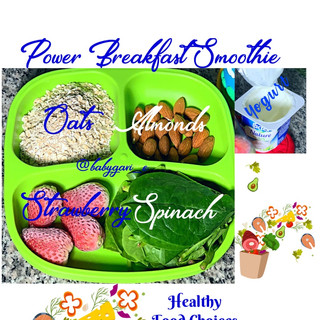
I have also included some helpful images. Please look through them😀
Have a lovely day :)




Comments